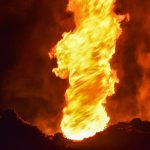
The ongoing West Asia conflict is proving increasingly costly for the United States, with expenses already exceeding $11.3 billion in the first six days. ET Now breaks down the projected cost of continuing the war, Washington’s evolving stance, and key flashpoints such as Iran’s Kharg Island.
According to available estimates, the cost for the first six days has exceeded $11.3 billion, while the first 100 hours alone accounted for about $3.7 billion. The unbudgeted share of the war has already reached $3.5 billion, and lawmakers are expected to seek an additional $50 billion to continue US operations against Iran and its facilities.
The United States’ stance has also evolved during the conflict. In the initial phase, it suggested that Iranian facilities had been completely decimated and that retaliation was unlikely. However, this was followed by a reassessment, with Washington acknowledging that Iran still has the capability to block the Strait of Hormuz using drones, mines and missiles. The focus has now shifted from safeguarding Israel and targeting Iran’s ballistic and nuclear capabilities to securing the Strait of Hormuz, a crucial route for global energy supplies.
The US role in the region has also shifted from acting as the sole protector to seeking support from countries such as China, France, Japan, South Korea and Britain, which depend more heavily on energy flows through the region. This marks a potential long-term change in Washington’s approach.
Looking ahead, Kharg Island in Iran could emerge as a key flashpoint. It serves as the backbone of Iran’s oil exports, with around 94 per cent of its crude shipments originating from there. Its deep-water capabilities make it strategically significant, particularly for supplying countries like China, thereby potentially drawing them further into the conflict. Overall, as the conflict continues, the financial burden on the United States is steadily increasing.
US does not need assistance from NATO: Trump
Trump on Tuesday said the United States does not need assistance from NATO or allies for operations related to Iran and the Strait of Hormuz, adding that most allies are unwilling to get involved despite concerns over Iran’s nuclear ambitions.
“The United States has been informed by most of our NATO “Allies” that they don’t want to get involved with our Military Operation against the Terrorist Regime of Iran, in the Middle East, this, despite the fact that almost every Country strongly agreed with what we are doing, and that Iran cannot, in any way, shape, or form, be allowed to have a Nuclear Weapon,” Trump wrote on social media platform Truth Social.
“I am not surprised by their action, however, because I always considered NATO, where we spend Hundreds of Billions of Dollars per year protecting these same Countries, to be a one way street – We will protect them, but they will do nothing for us, in particular, in a time of need. Fortunately, we have decimated Iran’s Military -Their Navy is gone, their Air Force is gone, their Anti-Aircraft and Radar is gone and perhaps, most importantly, their Leaders, at virtually every level, are gone, never to threaten us, our Middle Eastern Allies, or the World, again! Because of the fact that we have had such Military Success, we no longer “need,” or desire, the NATO Countries’ assistance – WE NEVER DID! Likewise, Japan, Australia, or South Korea,” Trump said, adding, “In fact, speaking as President of the United States of America, by far the Most Powerful Country Anywhere in the World, WE DO NOT NEED THE HELP OF ANYONE!”
Earlier, Trump said he has asked roughly half a dozen countries to send warships to help reopen the crucial Strait of Hormuz, a key waterway through which one-fifth of the world’s traded oil passes. So far, none has committed. He also indicated that he may use his upcoming trip to China to press Beijing to support a new coalition aimed at restoring oil tanker traffic through the strait, a suggestion later downplayed by his treasury secretary.