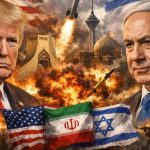
The escalating military situation in the Middle East has moved far beyond a local skirmish, evolving into a massive financial drain for the world’s second-largest economy. While the United States conducts precision strikes on Iran’s Kharg Island, the real damage is being felt in Beijing’s balance sheets. However, China is not the only nation under pressure; the shockwaves of this conflict are destabilising economies across the globe.
The Physical Disconnect
The U.S. strikes on Kharg Island represent a direct hit to China’s energy security. Kharg Island is the heart of Iran’s oil industry, handling nearly 90 per cent of the country’s crude exports. Crucially, almost all of that oil, roughly 95 per cent, is destined for Chinese refineries. By targeting the infrastructure of this hub, the U.S. is effectively cutting the cord between the Dragon and its most reliable source of cheap, sanctioned energy. This forces China to look elsewhere for oil, but the alternatives come with a much higher price tag.
The End of the Sanction Discount
For years, China has enjoyed a massive financial advantage by buying Iranian oil that the rest of the world could not touch. Because of Western sanctions, Tehran sold its crude to Beijing at a loyalty discount of nearly $10 per barrel. This saved the Chinese economy billions annually. Now, with Iranian supply lines physically damaged and the Strait of Hormuz in a state of chaos, that discount has vanished. China is now forced to compete on the open market for more expensive oil from producers like Brazil or West Africa, wiping out a major source of its industrial competitive edge.
The Gold Hedge: Bypassing the Dollar
To fight back against this “financial siege,” Beijing is leaning on its massive gold reserves. For 16 consecutive months, the People’s Bank of China has been aggressively hoarding gold, bringing its official holdings to over 2,300 tons. This is not just a rainy day fund; it is being used to build a new financial infrastructure.
By using gold-backed trade settlement options and platforms like the Shanghai Gold Exchange, China can settle energy imbalances with trading partners without ever touching the U.S. dollar. This allows Beijing to offer a “sanctions-proof” payment method to countries like Russia and Iran. If the U.S. attempts to freeze digital assets or cut off access to global banking systems, physical gold serves as a neutral, unfreezable asset that ensures the lights stay on in Chinese factories.
The surge in oil prices is now moving from the docks to the factory floor. China’s manufacturing sector, which started 2026 with a strong 6.3% growth, is facing a sudden input price shock. For energy-intensive industries like steel, chemicals, and electronics, energy typically accounts for a significant portion of production costs. As oil remains above $100, these firms are seeing their profit margins evaporate. Data from March 2026 shows that China’s Producer Price Index (PPI) is trending upward for the fifth consecutive month, largely driven by raw material and energy costs. While state-owned giants have the capital to absorb some of the shock, small and medium-sized manufacturers are entering survival mode. If energy costs do not stabilise within the next three months, analysts expect Beijing to be forced to roll out emergency subsidies to prevent a wave of factory closures.
The $70 Million a Day Penalty
As the world’s largest oil importer, China is hypersensitive to price fluctuations. Every $1 increase in the price of a barrel adds hundreds of millions to China’s annual import bill. At current levels, analysts estimate that China is overpaying by approximately $70 million every single day compared to its pre-war budget. If this trend continues, the annual drain on China’s economy could exceed $25 billion from the Iranian route alone.
A Strategic Squeeze
Ultimately, the U.S. strikes on Iran are acting as a controlled demolition of China’s energy strategy. By making Iranian oil physically difficult to export and globally expensive to buy, Washington is forcing Beijing to burn through its financial reserves just to maintain the status quo. While China has spent years hoarding gold and grain to prepare for such a crisis, the sheer scale of the daily financial losses in the energy and manufacturing sectors is testing the limits of its silent fortress strategy.