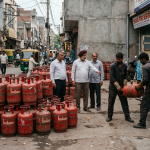
LPG gas cylinders: Prices of liquefied petroleum gas (LPG) cylinders have been increased across India, both domestic and commercial gas now costlier. While the price of a 14.2 kg domestic LPG cylinder has increased by Rs 60, the 19 kg commercial cylinder has become costlier by Rs 144 in major cities and states.
Price hike hits households, eateries
The price hike has not only impacted households but also flagged concerns for eateries as well as hotels that mainly depend on commercial LPG for daily operations. This comes amid the ongoing conflict involving the United States, Israel and Iran, triggering oil concerns and reports on the LPG shortage grappling major Indian cities.
LPG Price on March 11, 2026
Here are the latest domestic LPG (14.2-kg cylinder) prices in key Indian cities as of March 11, 2026.
| City | LPG Price (Rs/cylinder) |
| New Delhi | Rs 913.00 |
| Mumbai | Rs 912.50 |
| Kolkata | Rs 939.00 |
| Chennai | Rs 928.00 |
| Bengaluru | Rs 915.50 |
| Hyderabad | Rs 965.00 |
| Noida | Rs 910.50 |
| Patna | Rs 1,002.50 |
Government issues new guidelines
To deal with the situation and ensure stable supply inside the country, the Ministry of Petroleum and Natural Gas has issued new guidelines to regulate natural gas distribution.
Under these rules, the central government has divided gas consumption sectors into four priority categories.
In the first priority category, sectors considered essential will continue to receive full supply. These include domestic piped natural gas used in households, CNG used in transport, LPG production units, pipeline compressor fuel and other operational requirements of the gas pipeline network. These sectors will receive 100 per cent of their average gas consumption recorded during the past six months.
Fertiliser plants have been placed in the second priority category. According to the guidelines, these plants will receive around 70 per cent of their average natural gas consumption from the last six months.
The government said this step aims to ensure fertiliser production continues while managing limited gas supplies. Industries connected to the national gas grid will also face limited supply.
Tea industries, manufacturing units and other industrial consumers will receive about 80 per cent of their average gas consumption of the past six months. Gas distribution companies have also been directed to manage supply carefully. Under the guidelines, they must ensure that industrial and commercial consumers receive at least 80 per cent of their average gas consumption from the last six months through their networks.
Government sources to ET Now
Government sources told ET Now that India will not release its strategic oil reserves at the call of G7 countries, even as the group weighs the possibility of releasing reserves to stabilise global markets.
Sources also said petrol and diesel prices in India are unlikely to be hiked even if crude oil rises to $120 per barrel, adding that the country currently has sufficient crude stock.