India’s infrastructure landscape has undergone a significant expansion over the past 12 years, with increased public capital expenditure supporting the development of transport networks, logistics systems, housing, water supply and urban infrastructure.
Public capital expenditure has risen from about Rs 2 lakh crore in 2014-15 to Rs 12.2 lakh crore in 2026-27, as infrastructure development has increasingly focused on integrated planning and expanding capacity.
Indian Railways has seen a major expansion in electrification, safety systems and passenger services. The railway budget increased from Rs 32,000 crore in 2014-15 to Rs 2.78 lakh crore in 2026-27, while rail electrification reached 99.6 per cent by July 2026, compared with about 20 per cent before 2014.
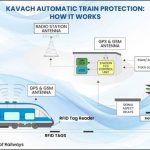
The rail network now has 162 Vande Bharat trains, two Vande Bharat Sleeper services and 72 Amrit Bharat services. Kavach Version 4.0 has also been commissioned across 2,633 route kilometres as of July 2026.
The Mumbai-Ahmedabad High-Speed Rail Corridor is being developed over 508 kilometres with a design speed of 350 kmph. Under the Amrit Bharat Station Scheme, redevelopment has been completed at 261 of the 1,340 identified stations as of July 18, 2026.
India also launched its first indigenously developed hydrogen fuel cell trainset in July. The 10-coach train, with a capacity of around 2,600 passengers, is operating on the Jind-Sonipat section and generates electricity onboard, with water vapour and heat as its only by-products.
The road network has expanded alongside rail connectivity. India now has a road network of 63.73 lakh kilometres, the world’s second-largest. The national highway network increased by about 61 per cent from 91,287 kilometres in 2014 to 1,46,572 kilometres in March 2026.
The length of four-lane and wider national highways has also increased from 18,371 kilometres in 2014 to 45,516 kilometres. Under the Bharatmala programme, 22,590 kilometres of roads had been completed by March 31, 2026.
Major engineering projects have also expanded connectivity through difficult terrain. These include the Chenab Bridge, described as the world’s highest railway arch bridge, the Anji Khad Bridge, India’s first cable-stayed railway bridge, and the Pamban Bridge, India’s first vertical-lift railway sea bridge.
The Z-Morh tunnel in Jammu and Kashmir provides all-weather access through avalanche-prone terrain, while the Atal Tunnel and Dr Syama Prasad Mukherjee Tunnel have improved connectivity in the Himalayan region.
Civil aviation has also recorded a substantial expansion. Under UDAN, 95 airports, heliports and water aerodromes have been connected through 679 routes, benefiting more than 1.68 crore passengers as of July 15, 2026.
The number of operational airports increased from 74 in 2014 to 165 in July 2026, while 25 greenfield airports have been approved since 2014. Digi Yatra is now operational at 38 airports and has enabled more than 10 crore seamless journeys.
Urban mass transit has expanded significantly, with India’s metro network growing from 248 kilometres in 2014 to more than 1,155 kilometres in 2026. The number of cities with metro connectivity increased from five to 26, while daily ridership crossed 1.15 crore passengers.
The expansion has also included new forms of urban transport, with Kolkata operationalising India’s first underwater metro tunnel and Kochi operating the country’s first Water Metro system.
The maritime sector has similarly seen an increase in capacity. Major ports’ cargo-handling capacity nearly doubled from 873 million metric tonnes per annum in 2014 to 1,728 MMTPA in 2026. Vessel turnaround time improved from 94 hours to 48.8 hours in 2025-26.
Major ports handled 915.17 million tonnes of cargo during 2025-26, compared with 581 million tonnes in 2014-15. The number of national waterways increased from five in 2014 to 111 in 2026, of which 32 are operational.
Infrastructure development has also been linked with industrial and logistics planning. The PM GatiShakti National Master Plan integrates infrastructure planning across 58 ministries and departments using more than 3,291 data layers.
As of August 11, 2026, 396 infrastructure projects with an estimated cost of about Rs 18.66 lakh crore had been evaluated through the Network Planning Group mechanism. Of these, 256 projects had been sanctioned and 198 were under implementation.
The PRAGATI platform has reviewed 382 projects worth more than Rs 85 lakh crore and resolved 2,958 issues. More than 4,220 industrial parks have also been mapped on the India Industrial Land Bank.
The infrastructure expansion extends to basic services and housing. Under the Jal Jeevan Mission, rural tap-water coverage increased from 3.23 crore households in 2019 to around 15.91 crore households as of August 10, 2026.
Under PMAY-Urban, 99.25 lakh houses had been completed as of August 12, while 3.13 crore of the 3.91 crore houses sanctioned under PMAY-Gramin had been completed.
The government has also sanctioned projects worth about Rs 2.79 lakh crore under AMRUT and AMRUT 2.0 since 2015, while 7,790 projects worth Rs 1,56,257 crore had been completed under the Smart Cities Mission as of March 2026.
The post India’s infrastructure push: Rail, roads, airports and urban connectivity expand over 12 years appeared first on DD India.