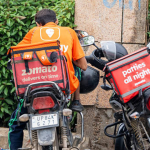
This restaurant once fed India’s cricket team its iconic Biryani, and today it is struggling to feed its own kitchen. Zam Zam, the iconic Kolkata eatery that served biryani to the Indian cricket team — and to the Pakistan side during the 2023 ODI match in the city — is among the hardest hit as a deepening LPG crisis squeezes commercial kitchens across West Bengal, and the country at large. Where the restaurant once burnt through three commercial cylinders a day, it is now lucky to get one.
“The recent LPG crisis has affected us in a very bad way. We are not getting even one or two cylinders daily, so we have limited our production — we are short on the menu,” said Shaadman, director of Zam Zam. Dishes that require longer cooking times have been quietly dropped. “Indian items which take time — gravies, desserts — we have reduced those from the menu,” he said. And Zam Zam is not alone.
With Ramzan underway and Eid just days away, the crisis has landed at the worst possible time for Kolkata’s celebrated Mughlai restaurant belt. Rumali roti, slow-cooked gravies, and certain biryani preparations — the backbone of the Eid menu — are among the first casualties.
“It’s a very serious situation as of now. As a first step towards this crisis, we have cutailed the menu. We have stopped late-night operating hours. By 10.15–20 p.m., we close the restaurant… earlier it was a late-night affair,” said Oudh spokesperson Shiladitya.
“For Oudh, we are focusing on tandoor items, which require charcoal like Roti, Naan etc. We are cutting down on gravy-based items which require gas to be cooked,” he said, adding that to cook Biryani on coal ‘chulha’, we take the operations We are trying to get a land, where we could cook the Biryani centrally on coal ovens, and from there we will distribute it to all our outlets. We have already started looking for a place, and we will start this procedure in the next 2-3 days. This is mostly it. As and when there are developments, we have to step down one by one, he said. Until now, we are somehow managing to pull things through.
In Ramzan, when restaurants run at their full capacity and stretch even beyond their regular hours, they are instead rationing gas and reworking menus on the fly depending on the availability of gas cylinders.
Aminia, one of Kolkata’s most recognisable Mughlai biryani chains, has switched to emergency arrangements. “We have bought heavy-duty induction cooktops and have started cooking on coal stoves to continue preparing biryani. We have stopped making rumali rotis and some of our special biryani dishes,” said Aminia director Kabir Azhar.
The supply disruption has its roots in a crisis far beyond Kolkata. Global energy routes are facing acute uncertainty as the ongoing US-Israel conflict with Iran has brought shipping through the Strait of Hormuz — one of the world’s most critical energy chokepoints — to near a standstill. The ripple effect has hit India’s LPG supply chain, with the commercial segment bearing the first and sharpest impact. Commercial LPG supply has probably taken a big hit as it is less insulated from international price and availability shocks, leaving restaurants, hotels and street food vendors exposed.
For Kolkata eateries, the timing compounds the pain. The month of Ramzan is typically their busiest period, with iftar crowds and advance Eid orders driving peak revenues. Several restaurant owners say they have no clarity on when supply will normalise — or if it will before Eid.
In the meantime, coal stoves and induction cooktops are filling the gap. It is a makeshift fix for a city whose food identity runs deep — and for restaurants whose names were made, in part, by the people they once cooked for.