The Union Cabinet on Friday approved a proposal to convert the historic North and South Blocks into part of the proposed “Yuge Yugeen Bharat National Museum”, marking a major shift in the administrative and symbolic landscape of the national capital.
The decision comes a day after Prime Minister Narendra Modi dedicated the new Prime Minister’s Office – now named ‘Seva Teerth’ – to the nation on February 13, 2026. With the transition, Cabinet meetings will no longer be held in South Block, ending nearly 95 years of continuous administrative use of the iconic colonial-era complex.
From colonial power centres to ‘Seva Teerth’
Constructed during British rule, the North and South Blocks long served as the nerve centre of India’s governance. Since Independence in 1947, the Prime Minister’s Office had functioned from South Block, and successive Cabinets – under 16 Prime Ministers from Jawaharlal Nehru to Narendra Modi – took key policy decisions within its chambers.
Addressing the significance of the shift, Cabinet described the final meeting in South Block as a historic moment symbolising a transition from a colonial administrative legacy to a modern governance framework aligned with the vision of a “Viksit Bharat” (Developed India).
The Cabinet said the move reflects a broader shift from a culture of “power” to a culture of “service”, with the new administrative complexes – ‘Seva Teerth’ and ‘Kartavya Bhavans’ – designed as modern, technology-enabled and environmentally sustainable workspaces aimed at improving efficiency and productivity.
Witness to India’s defining moments
Over the decades, the South Block complex witnessed key moments in India’s history – from the trauma of Partition and wartime decisions to policy deliberations during the Emergency and major economic reforms in peacetime. It also saw the evolution of governance from typewriters to digital administration.
In recent years, the Cabinet said, several landmark decisions were taken from South Block, including reforms such as Direct Benefit Transfer (DBT), the Swachh Bharat Mission, Digital India, and the rollout of the Goods and Services Tax (GST). Major political and security decisions – including the abrogation of Article 370, the law against triple talaq, and cross-border military operations – were also approved during this period.
A national museum for a civilisational legacy
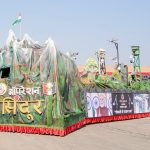
With the Cabinet’s approval, the North and South Blocks will be integrated into the proposed Yuge Yugeen Bharat National Museum, envisioned as a space celebrating India’s civilisational heritage spanning thousands of years.
The museum, according to the Cabinet, will connect India’s ancient cultural legacy with its modern aspirations, offering future generations a comprehensive narrative of the country’s journey from colonial rule to global prominence.
The Union Cabinet expressed gratitude to PM Modi for what it described as a visionary step to transform the historic seat of governance into a symbol of service-oriented administration while preserving its legacy through a national museum.
The post Cabinet approves transition of North, South Blocks into ‘Yuge Yugeen Bharat’ National Museum appeared first on DD India.