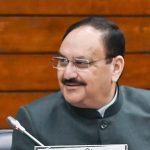
Prime Minister Narendra Modi on Thursday shared an article written by Union Minister for Petroleum and Natural Gas Hardeep Singh Puri, underscoring the importance of robust, evidence-based criticism in strengthening policymaking and safeguarding reforms.
The article highlights that while India welcomes scrutiny and informed criticism, cynicism and motivated pessimism have no place in the country’s democratic progress. It highlights the value of constructive public debate, rooted in facts and responsibility, as India steps into the new year.
Responding to Puri’s post on X, the Prime Minister said, “India welcomes robust, evidence-based criticism that strengthens policy and protects reform. Cynicism has no place in our democratic progress! This write-up by Union Minister Shri Hardeep Singh Puri reflects constructive debate that can prove to be a boon for this new year. Do give it a read!”
Sharing the link of his article on X, Puri said democracy benefits from criticism but not from what he termed “motivated fatalism” by certain commentators who, he argued, are guided more by political preferences than academic rigour. He observed that a section of commentary has emerged that “markets doubt as sophistication,” reducing complex reform processes to caricatures and portraying every transition as permanent failure.
In his article, Puri said that as India enters 2026, public debate should be marked by greater discipline and responsibility. Drawing on philosopher Friedrich Nietzsche’s ideas, he noted that critique should help societies live and improve, rather than undermine confidence in governance.
The minister contended that claims questioning the credibility of India’s data, manufacturing capacity and reform outcomes do not withstand factual scrutiny. He cited the expansion of large, verifiable digital systems such as GST and UPI, noting that in November 2025 alone, UPI recorded nearly 20 billion transactions worth over ₹26 lakh crore, significantly enhancing transparency and auditability.
Highlighting welfare outcomes, Puri pointed to NITI Aayog’s National Multidimensional Poverty Index, which shows that nearly 24 crore Indians moved out of multidimensional poverty between 2013–14 and 2022–23. He also cited the impact of Direct Benefit Transfer, which has crossed ₹45 lakh crore in cumulative transfers, resulting in substantial savings by reducing leakages.
On manufacturing, the article notes that under the Production Linked Incentive (PLI) schemes, realised investments have crossed ₹21 lakh crore across 14 sectors, with electronics emerging as a standout performer. India’s total exports of goods and services reached an all-time high of over $825 billion in 2024-25, strengthening the country’s global trade position.
Puri also highlighted improvements in financial discipline, pointing out that the gross non-performing asset ratio of scheduled commercial banks declined to about 2.3 per cent in 2025 from over 11 per cent in 2018. He cited progress in housing, healthcare, energy access and infrastructure as evidence of reforms delivering tangible outcomes for households.
The article further emphasised India’s adaptive federalism, noting that several states have demonstrated that better governance, faster clearances and sustained infrastructure delivery can attract investment and generate formal employment.
Puri said that India should demand criticism that improves policy rather than commentary that undermines confidence for applause. He added that credible, fact-based debate is essential to protect reforms, strengthen democratic choice and sustain investor confidence as the country continues on what he described as the “harder path of execution.”
The post PM Modi shares article stressing need for constructive, evidence-based debate appeared first on DD India.