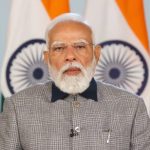
Union Minister for Jal Shakti C.R. Paatil on Monday chaired the 17th meeting of the Empowered Task Force (ETF), focusing on strengthening technology-led monitoring, data-driven decision-making and compliance mechanisms under the Namami Gange Programme.
The meeting reviewed progress on drainage mapping, sewage treatment infrastructure and innovative surveillance systems aimed at accelerating the rejuvenation of the River Ganga. Senior officials from central ministries, state governments and the National Mission for Clean Ganga (NMCG) participated in the deliberations.
Expressing satisfaction over recent progress, the Minister noted that 15 pollution abatement infrastructure projects were completed during the current calendar year, calling it a significant milestone in Ganga rejuvenation efforts. Uttar Pradesh led with six completed projects, followed by Bihar with four, West Bengal with three, and Uttarakhand and Delhi with one project each. Paatil said the achievement reflected improved coordination, focused implementation and effective monitoring.
The meeting emphasised the reuse of treated wastewater and the adoption of research-based solutions such as aquifer mapping, bioremediation, innovative sewerage treatment projects and Common Effluent Treatment Plants (CETPs). The Minister directed all states to expedite the formulation of policies for the safe reuse of treated water, aligned with the national framework, and to set clear targets to promote reuse.
A key highlight of the meeting was a review of the aerial survey and GIS-based drainage mapping project in Uttar Pradesh. Officials informed the Minister that high-resolution aerial surveys along the Ganga’s main stem in the state have been completed, with data being integrated into a live GIS dashboard offering 2D and 3D visualisation. The dashboard enables basin-level pollution monitoring, identification of hotspots and prioritisation of drain remediation. The initiative combines LiDAR-based scientific data with drone-generated visual inputs, a first-of-its-kind approach under the programme.
Paatil stressed the need for timely field-level validation by District Ganga Committees and better coordination among states and departments to ensure targeted interventions. He said the initiative would help in preparing comprehensive and accurate project reports by identifying drains and assessing their pollution load.
The ETF also approved the annual accounts of the NMCG, with the Minister appreciating the organisation’s financial discipline and reduction in pending utilisation certificates.
To further strengthen oversight of sewage treatment plants (STPs), NMCG announced the introduction of CCTV-based real-time monitoring integrated with AI-enabled analytics and a centralised dashboard. This will complement existing Online Continuous Effluent Monitoring Systems (OCEMS), which track water quality parameters and are linked to the public Ganga Pulse portal.
The Minister also lauded the regular cleanliness drives conducted under the “Ek Din, Ek Ghanta, Ek Saath” campaign and appreciated the public disclosure of STP performance through the Ganga Pulse platform. He was briefed on initiatives under the River City Alliance, including collaboration with UN-Habitat to promote river-sensitive urban development and climate-resilient solutions.
Concluding the meeting, Paatil commended the collective efforts of all stakeholders and expressed confidence that coordinated, technology-driven initiatives would further strengthen the mission to rejuvenate the River Ganga.
The post Jal Shakti Minister C.R. Paatil chairs 17th ETF meeting, pushes tech-driven monitoring for Ganga rejuvenation appeared first on DD India.